Trump Threatens More Tariffs as EU, Canada Retaliate
.jpeg) |
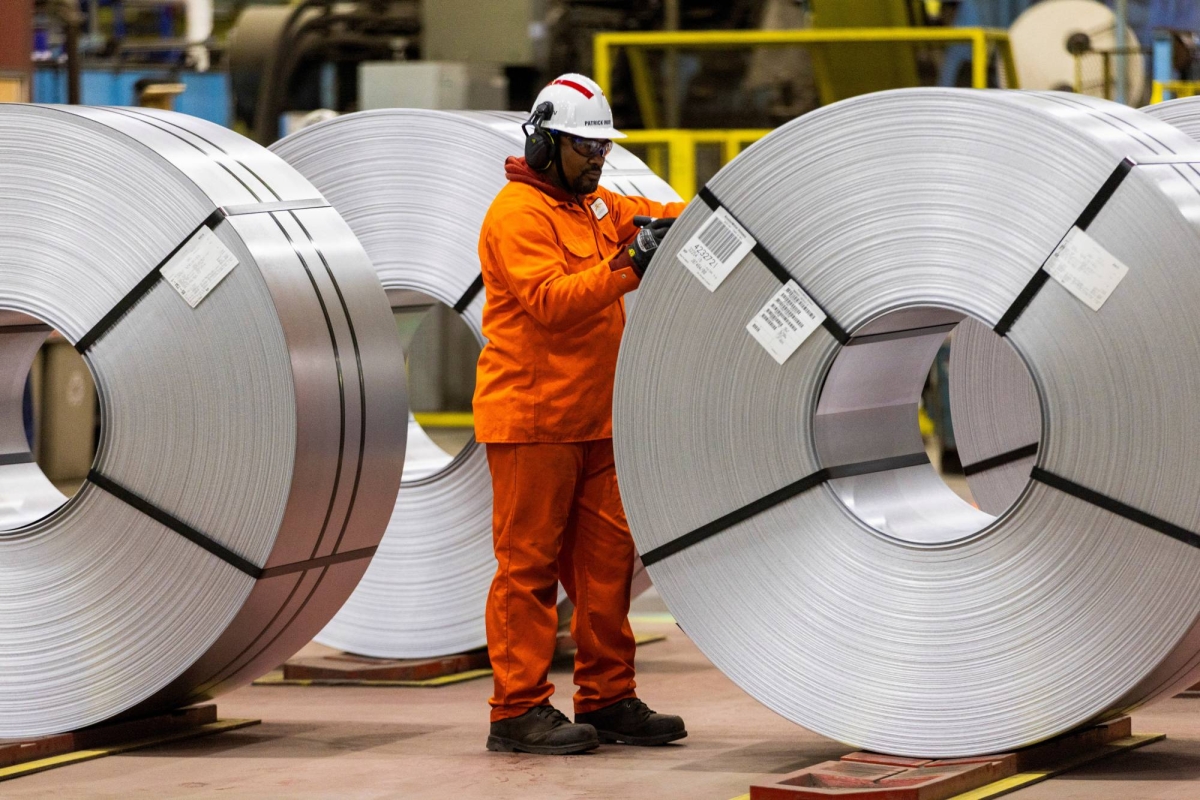
A worker inspects a steel coil on the factory floor before Canada's Prime Minister-designate Mark Carney visits the ArcelorMittal Dofasco steel mill in Hamilton, Ontario, Canada, on Wednesday.
Just hours after Trump’s 25% tariffs on all U.S. steel and aluminum imports took effect, he warned that any retaliatory tariffs from the EU would be met with equal force.
“Whatever they charge us, we’re charging them,” Trump told reporters at the White House.
Rising Trade Tensions
Trump’s aggressive tariff policies have rattled markets, raised concerns of a potential recession, and strained U.S. relations with key allies, particularly Canada.
As the largest foreign supplier of steel and aluminum to the United States, Canada announced its own 25% retaliatory tariffs on U.S. metals, along with additional levies on products such as computers and sports equipment—totaling $20 billion.
“We will not stand idly by while our iconic steel and aluminum industries are unfairly targeted,” said Canadian Finance Minister Dominic LeBlanc.
In anticipation of economic fallout, Canada’s central bank preemptively cut interest rates.
Global Fallout
Trump’s tariffs extend to hundreds of downstream products, including nuts, bolts, bulldozer blades, and soda cans. Additionally, Commerce Secretary Howard Lutnick announced that copper imports would also be subject to new trade protections.
The EU has prepared countermeasures targeting up to $28 billion in U.S. goods, including bourbon, diamonds, bathrobes, and dental floss. While these products account for a small fraction of the overall EU-U.S. trade relationship, industry leaders warn the impact could be significant.
“It is not in our common interest to burden our economies with such tariffs,” said European Commission President Ursula von der Leyen, who signaled that negotiations with U.S. officials would continue.
Meanwhile, China vowed to protect its economic interests, and Japan’s Chief Cabinet Secretary Yoshimasa Hayashi warned that the tariffs could severely impact U.S.-Japan trade ties.
Although Britain and Australia criticized the U.S. move, they stopped short of announcing immediate retaliatory measures. Brazil, the second-largest steel supplier to the U.S., also refrained from immediate action.
Market and Business Reactions
While global stock markets remained stable—having largely anticipated the tariff increases—the ongoing trade war has left businesses on edge.
Luxury carmakers, chemical producers, and retailers have all expressed concern over rising costs and declining consumer confidence. More than 900 of the 1,500 largest U.S. companies have mentioned tariffs in earnings calls or investor briefings this year, according to LSEG data.
“We are in a trade war, and once a trade war begins, it tends to sustain and feed itself,” warned Airbus CEO Guillaume Faury.
Puma, the German sportswear giant, saw its stock plummet nearly 25% after reporting weaker-than-expected earnings, citing trade uncertainties as a major factor.
JPMorgan’s chief economist predicted a 40% chance of a U.S. recession this year, warning that Trump’s actions could erode trust in America’s economic leadership.
U.S.-Canada Relations Deteriorate
The escalating trade war comes as Canada prepares for a transition in leadership, with Prime Minister Justin Trudeau set to hand over power to his successor, Mark Carney.
Carney, speaking at a steel plant in Ontario, emphasized Canada’s willingness to negotiate but insisted that any discussions with Trump must be based on mutual respect.
“I’m ready to sit down with President Trump at the appropriate time—under conditions that respect Canadian sovereignty and work toward a common approach,” he said.
In the wake of the tariff dispute, anti-U.S. sentiment has grown in Canada. The U.S. national anthem has been booed at hockey games, some retailers have pulled American products from their shelves, and travel to the U.S. has dropped by 20% compared to the previous year.
With Canadian officials set to meet their U.S. counterparts in Washington on Thursday, the outcome of these negotiations could determine the next phase of the escalating trade battle.


0 comments:
Post a Comment